Nairobi-nummeret
Four days from Nairobi to the Mara and Lake Nakuru in October
What the four-day Landcruiser run out of Nairobi costs in October 2026, how long each leg takes, and which gates take payment.
Av Lukas BrandtNairobi neighbourhood by neighbourhood, on foot and by matatu
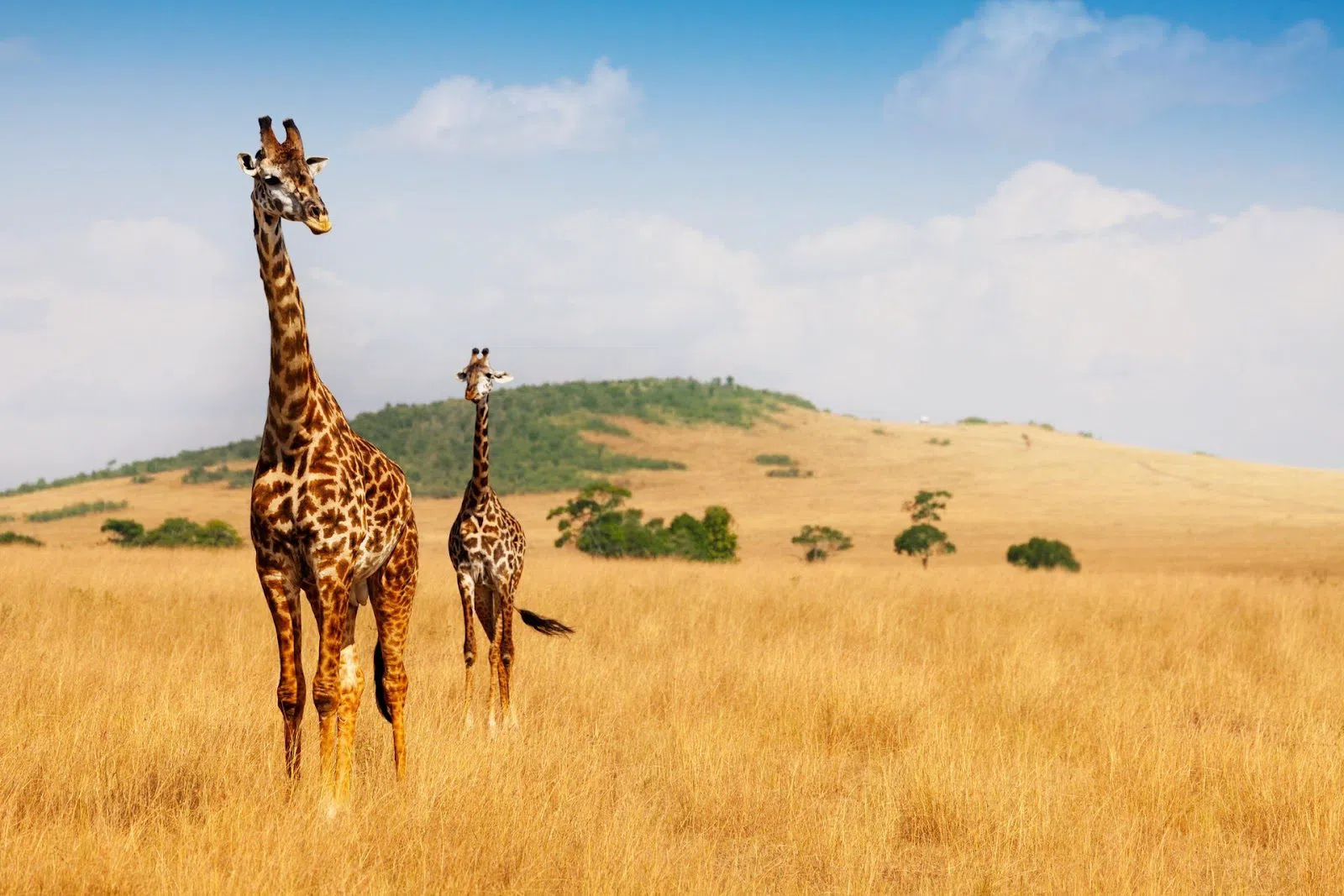
In October a non-resident adult pays KSh 26,000 a day to be inside the Maasai Mara, and the ticket covers 12 hours, 6 a.m. to 6 p.m. That high-season band runs July to December. Sekenani Gate, the nearest entrance to Nairobi, is 231km away.
The drive out through Mai Mahiu and Narok
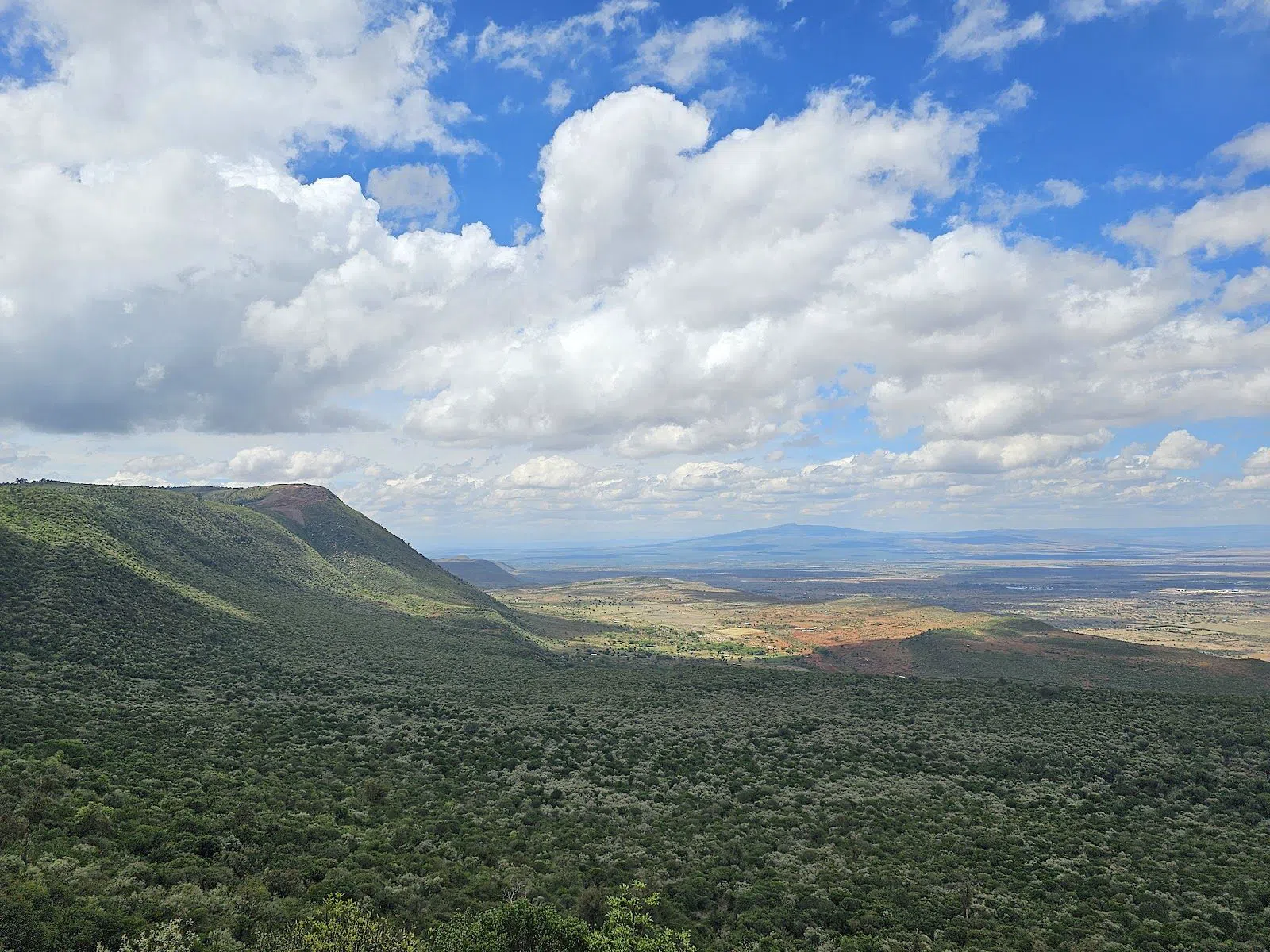
Great Rift Valley Viewpoint, Mai Mahiu is an ungated tarmac lay-by on the escarpment edge, 60km out of Nairobi. The valley floor drops away below it to the cone of Mount Longonot, with Suswa beyond. Soapstone and beadwork hang from corrugated-iron stalls, and the vendors work tour groups hard. Carvings and beadwork cost KSh 200 to 2,000 after bargaining, and the same soapstone is cheaper in Nairobi. Fifteen to twenty minutes is enough. Nothing here needs booking, and the stop is on the road anyway.
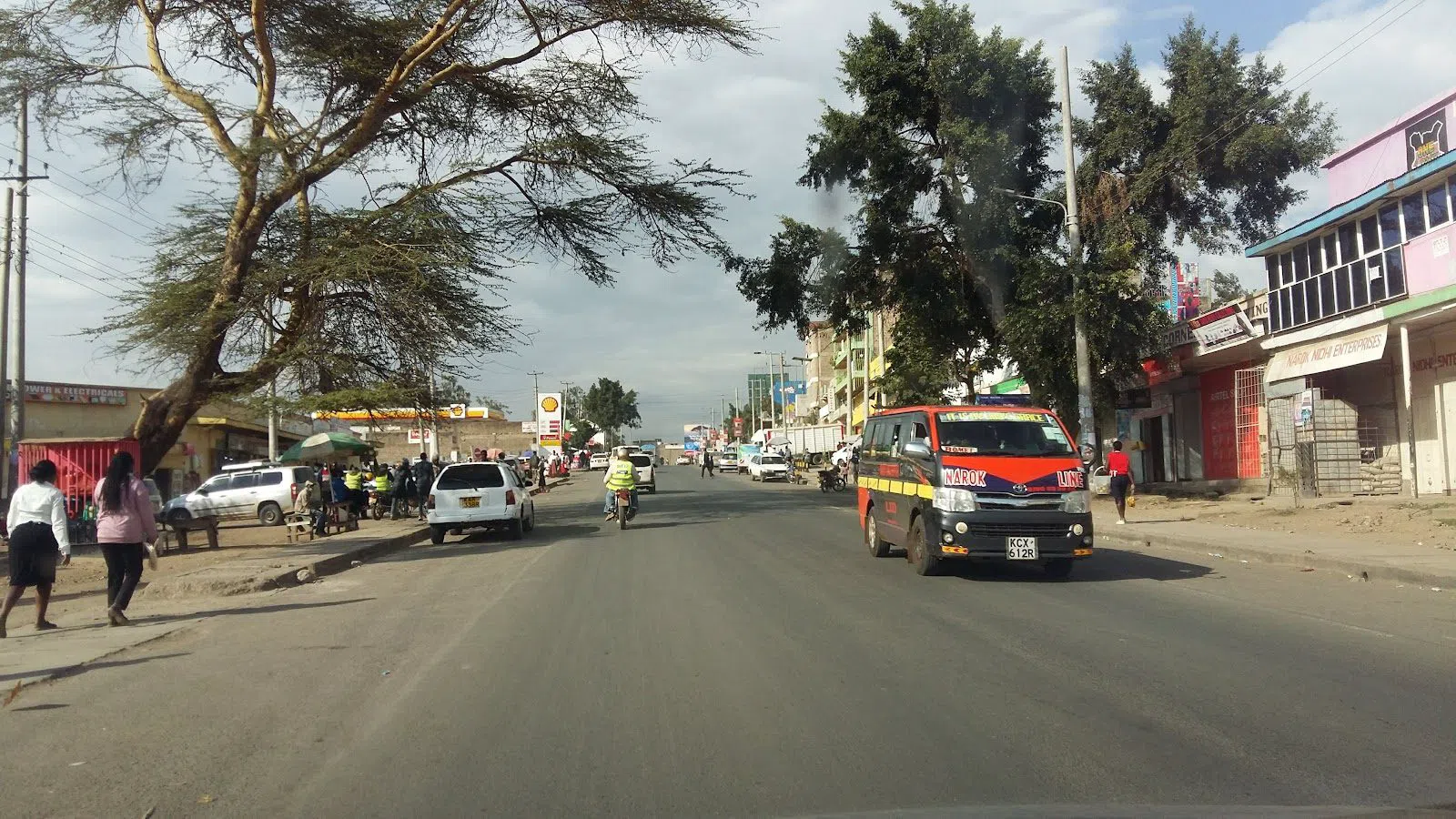
Narok Town is the last proper service stop, a low-rise Rift Valley market town on the B3 where the petrol forecourts fill with safari Landcruisers and Maasai traders in red checked shukas. Fill up here, draw cash at the last reliable ATMs and use a clean washroom. Lunch sitting down in the roadside cafés costs KSh 500 to 1,500, and bottled water and snacks stay under KSh 200. Past Narok the C12 degrades and the facilities thin out fast.
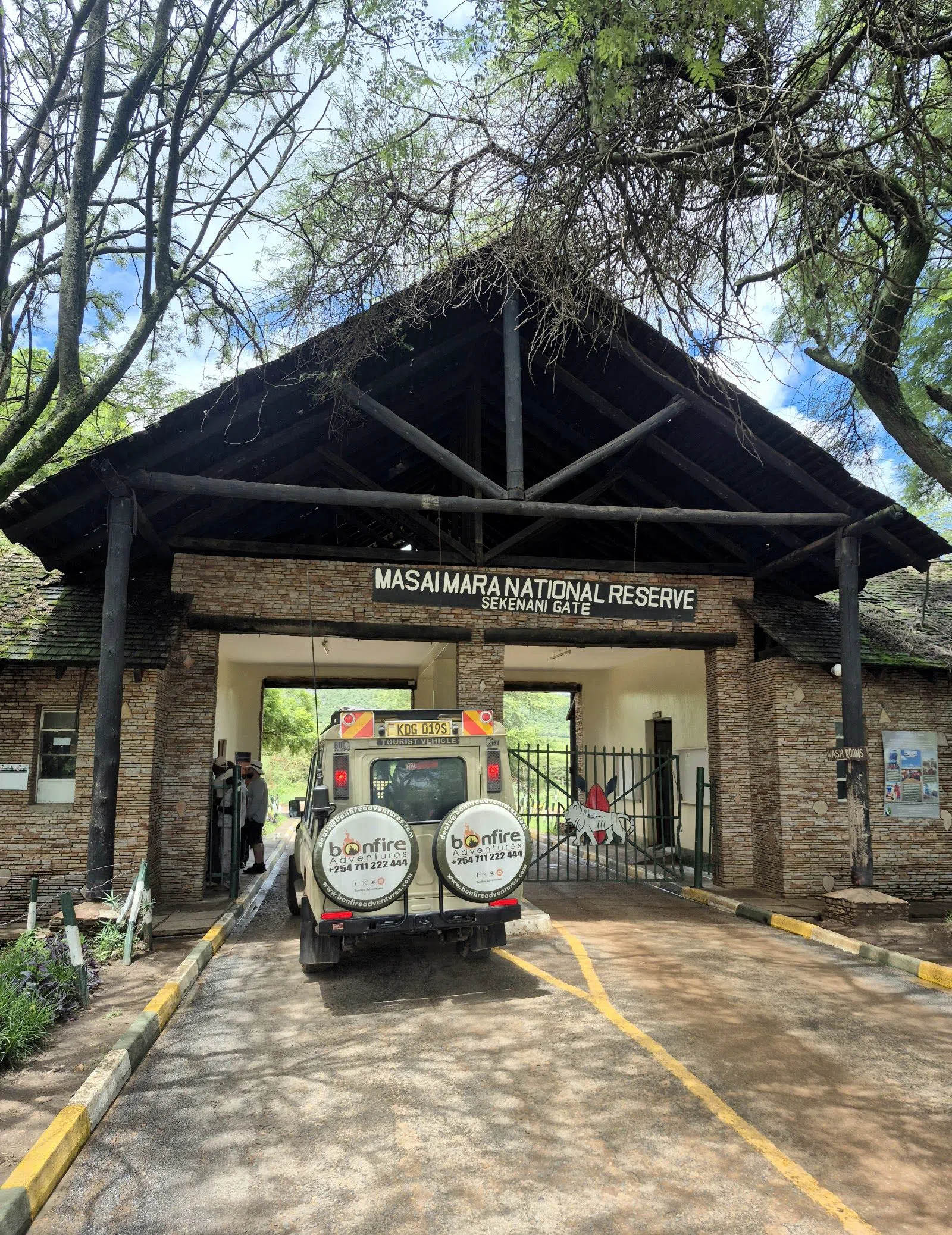
Sekenani Gate has the busiest queue in the reserve, five to six hours out of Nairobi on the A104, B3 and C12. Arrive before 10 a.m. or after 3 p.m. to miss the worst of it. The gate charges nothing of its own; what you pay here is the reserve fee, in cash US dollars or Kenyan shillings, by Visa or Mastercard, or by M-Pesa. Whether you turn up in a minibus or a Landcruiser, one person usually does the paperwork for the whole vehicle. The gatehouse is stone and timber behind a red-earth barrier arm, with carved Maasai shield signage and beadwork sellers along the fence line.
Planlegg reisen til Nairobi
Oppdaterte priser fra våre bookingpartnere.
Gratis avbestilling på mange rom. Vi kan motta provisjon når du bestiller.
Game drives in the Maasai Mara
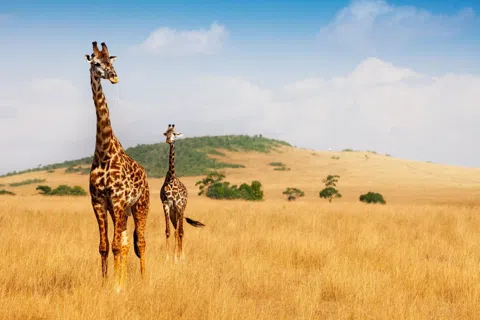
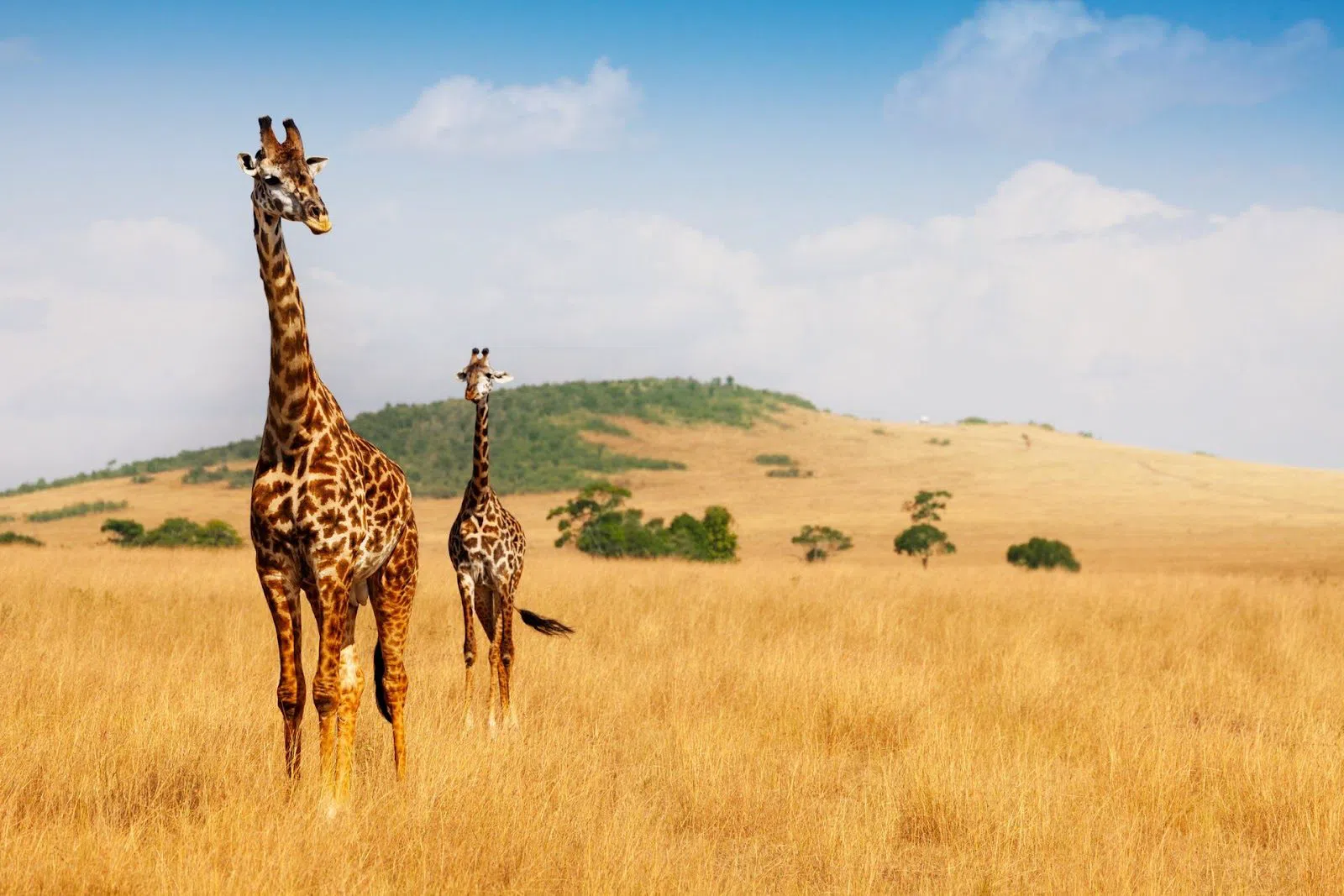
Maasai Mara National Reserve is why you drive out, and it is the biggest single cost of the trip. The fee is charged per person for each 12-hour ticket, and the vehicle is charged separately. You spend the day on rolling golden-grass plains broken by flat-topped acacia and red oat grass, lone balanites trees standing in the open and wildebeest columns strung across the horizon toward a distant escarpment. The roof hatch stays popped open and you stand up to look. The reserve takes groups of any size.
Sleeping in the Triangle or along the river
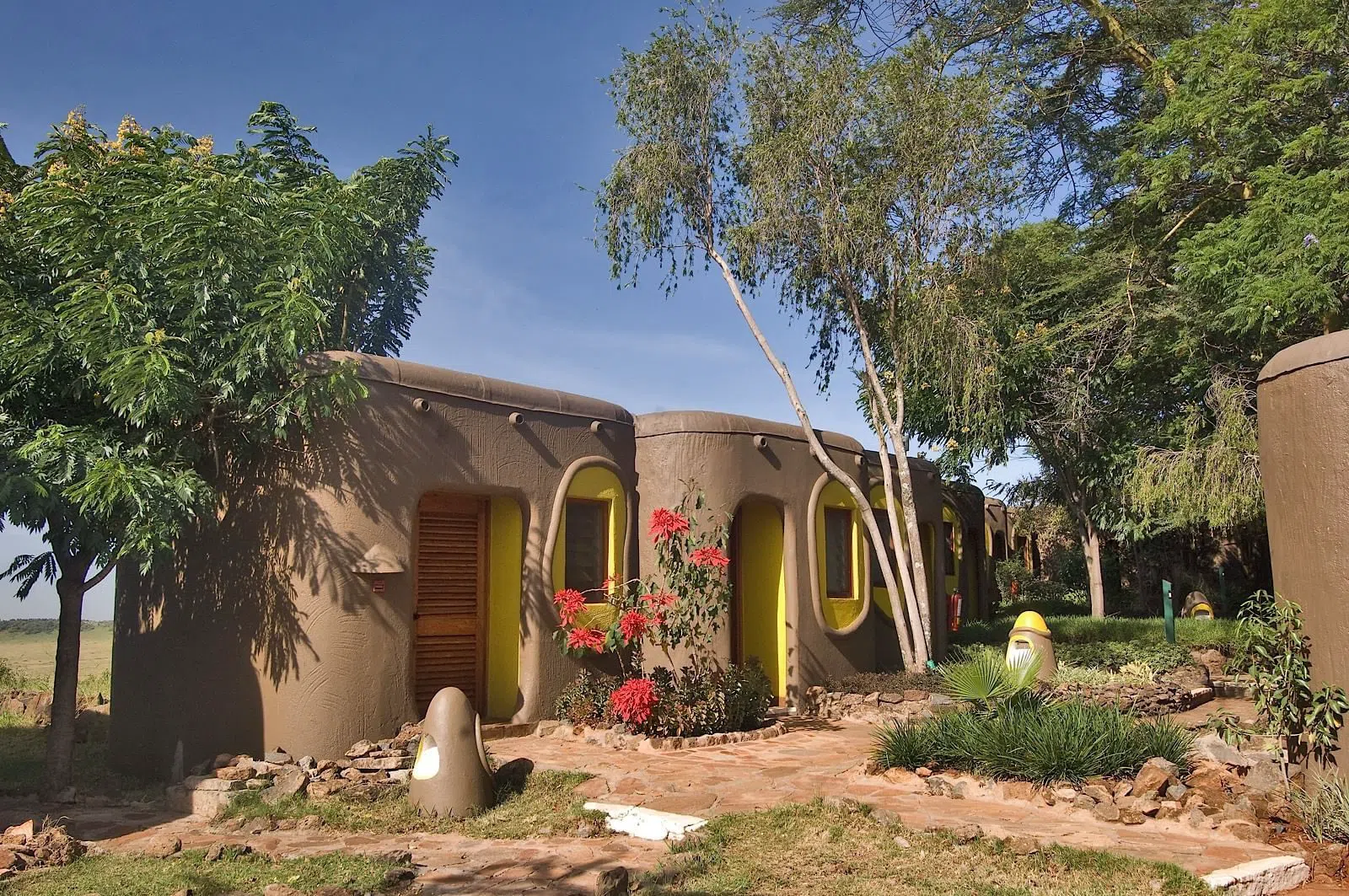
Mara Serena Safari Lodge is the only lodge inside the Mara Triangle, which puts the Mara River crossing points within morning reach. Its whitewashed circular rondavels, built on the manyatta pattern, sit on a bush-covered hilltop above a heated pool cut into the slope and enclosed in rock, and the picture windows look over a bend of the river and the open plains. Full board in high season costs KSh 45,000 to 70,000 per person per night. The lodge has 74 rooms, a conference room for up to 50 and bush-dining setups, so it takes tour groups routinely. Treat it as the upgrade if your tour's standard camp sits outside the gate.
Muthu Mara River Lodge opened on 14 January 2026 in Lemek Conservancy, near Aitong, strung along the Mara River. It is the group's working Mara property while the historic Keekorok lodge sits closed for renovation, so if an older itinerary still names Keekorok, this is where you will sleep. River-facing balconies look down on a hippo pool, and clipped green lawns and a swimming pool run up against raw bush. With 81 rooms, two bars and a buffet restaurant it takes coach and Landcruiser parties in its stride, and a night costs KSh 18,000 to 35,000 per person depending on season and board.
The dawn balloon flight
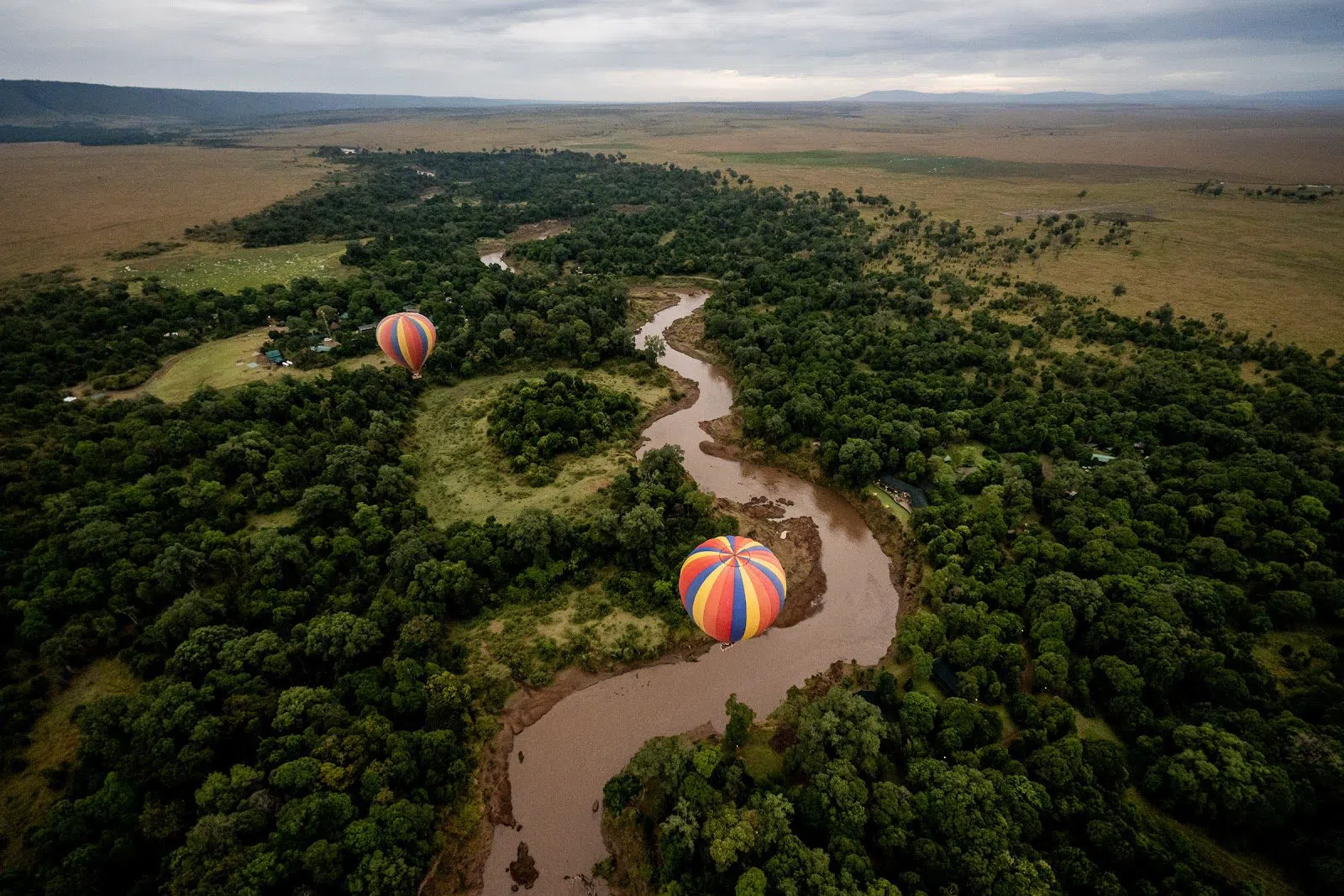
Governors' Balloon Safaris has flown from the Little Governors' launch site since 1978, and now runs eight pilots and more than 700 flights a year. The envelopes inflate in blue pre-dawn dark, the burner flare lights the basket, and you are aloft for 45 minutes to an hour, watching the shadow of the balloon slide over mist and grazing herds. Breakfast follows on the plains, laid out under a white tablecloth. The price is KSh 58,000 to 61,000 per adult and includes the flight, champagne and that breakfast, which makes it dearer than a night at either Mara lodge. A group is split between the basket's compartments, and flights fill in peak months, so put a group booking in well ahead.
Maji Moto and the hot springs
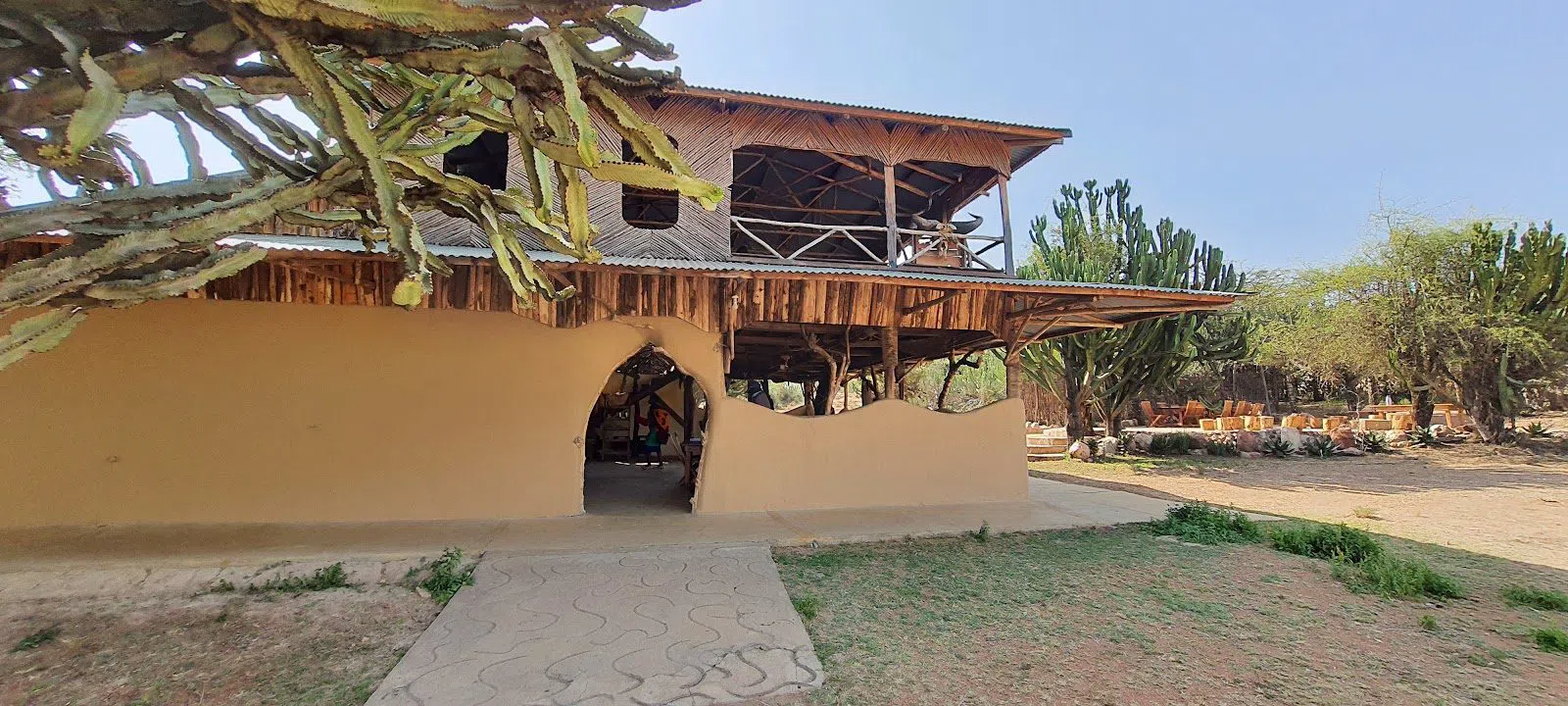
Maji Moto Maasai Cultural Camp stands on the dry Loita plains outside Narok, just off the Narok road, under Chief Salaton Ole Ntutu. Hand-built thatched bandas, red shuka cloth and stacked beadwork ring a steaming volcanic hot spring pool edged with reeds. The other half people remember is the widows' village of mud-and-dung huts. Arrange the guided warrior walks, village visits and campfire sessions in advance; the camp handles school parties as well as touring groups. Rates for a day cultural visit are set by the community, and you should agree the figure before you arrive. Fixed-fee manyatta stops are sold at the gates, but this one is run by the community and booked direct.
Walking among game at Crescent Island
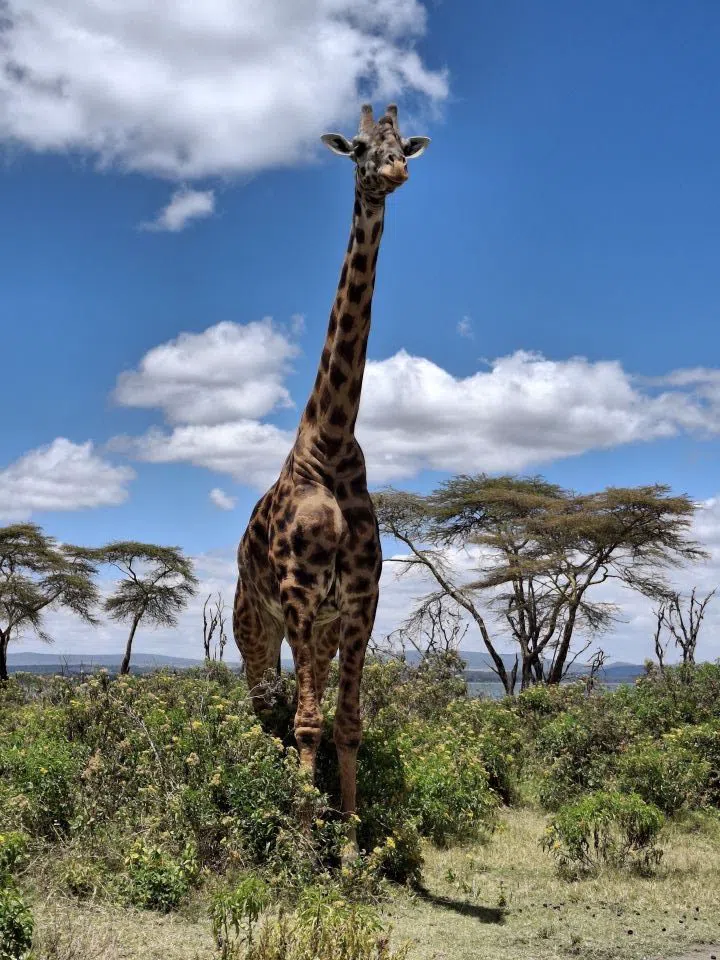
Crescent Island Game Sanctuary, Lake Naivasha breaks the drive between the Mara and Nakuru legs, and it is the one place on this route where you walk among big game on foot. An open boat takes you out to a grassy crescent-shaped spit where dead drowned fever trees stand in the shallows and zebra, giraffe and waterbuck graze within walking distance. There are no fences and no predators on the island. Entry costs KSh 4,300 per non-resident adult and KSh 2,100 for children, and the operator charges for the boat separately. Pay the sanctuary directly at the island and never hand entry money to a boat tout. It opens at 8:30 a.m. and closes at 5:45 p.m., with last entry at 4:30 p.m. Day visitors can simply turn up; a group that wants a private guide should book ahead.
Lake Nakuru, the rhino sanctuary and Baboon Cliff
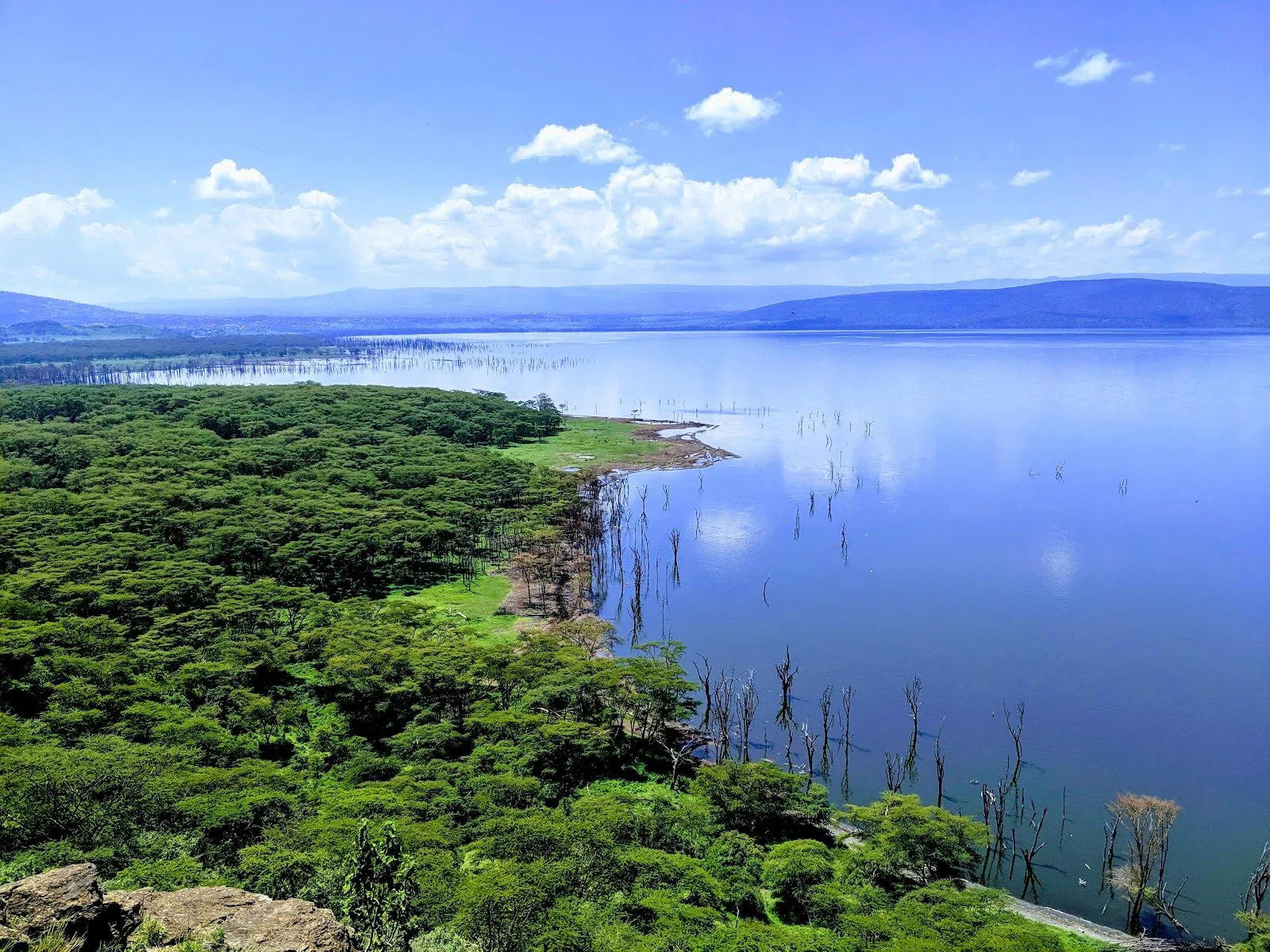
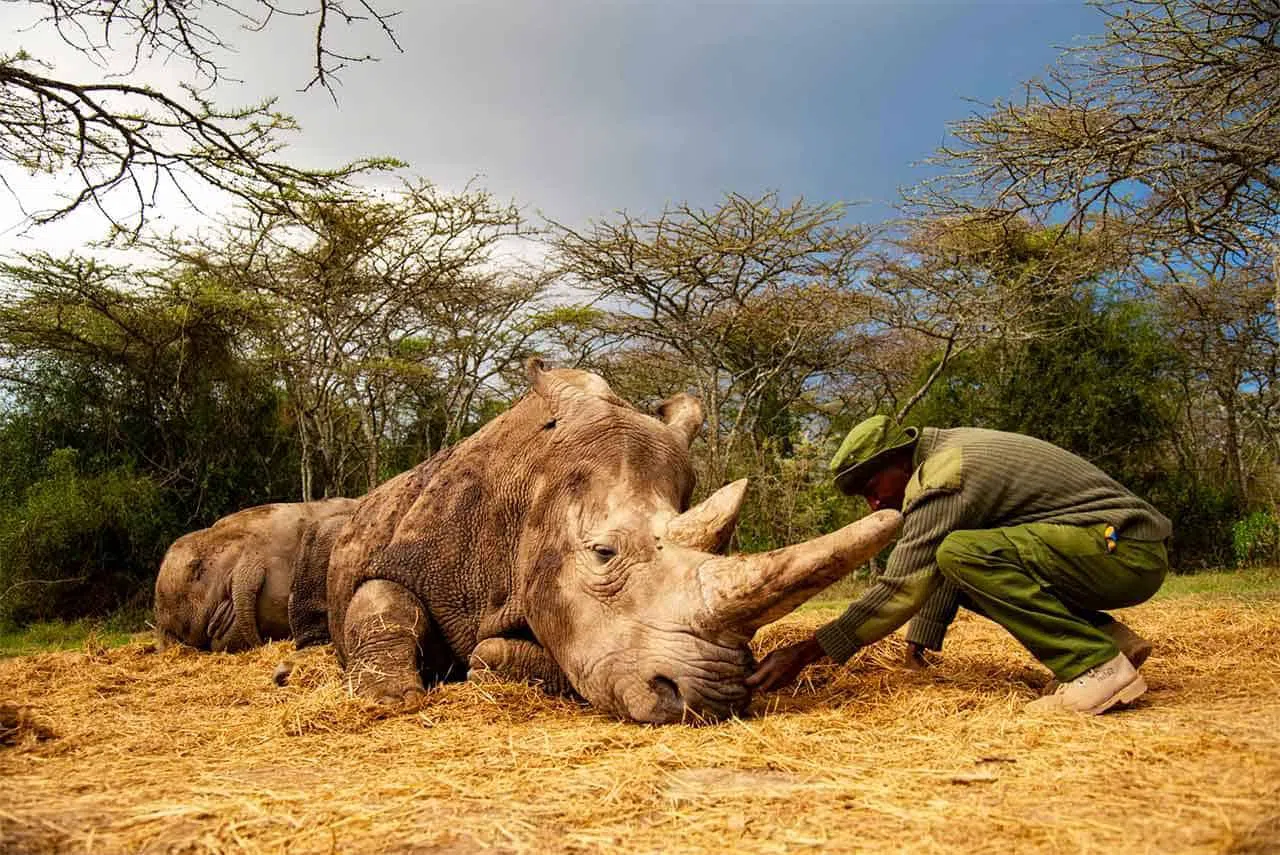
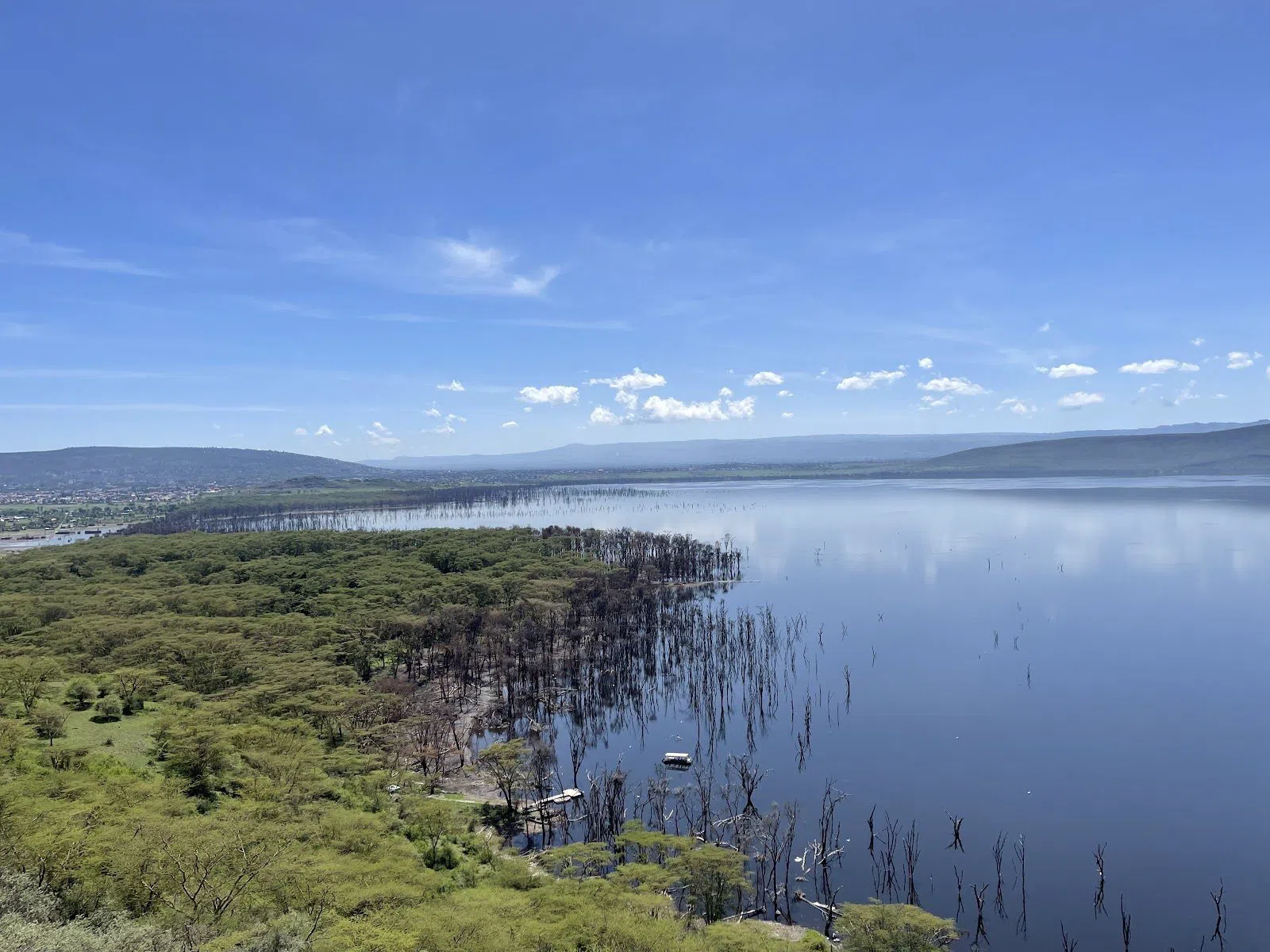
Lake Nakuru National Park sells tickets only through the KWS eCitizen portal, and the gates take no cash at all. The ticket covers 24 hours. Entry costs KSh 11,700 per non-resident adult and half that for children, plus a vehicle charge. The draws are the fenced rhino sanctuary and the Rothschild's giraffe. The lake has doubled in area and drowned the old northern shore tracks, and the big flamingo flocks have largely moved to Elementaita and Bogoria. Fever-tree forest stands half submerged, yellow-green trunks in floodwater, white rhino grazing short turf and giraffe set against a soda-crusted shoreline.
Baboon Cliff Viewpoint costs nothing once you are inside the park and takes no booking. Concrete picnic benches sit on the rocky escarpment ledge under thorn scrub, troops of olive baboons work the rocks, and the whole flooded lake and its white alkaline rim lie below. One photograph from here gives you the scale of the flooding. Tour groups fill the benches mid-morning, so a dawn or late-afternoon stop is calmer. You can drive right to the top, though the access road gets rough in the rains, so ask your driver before committing.
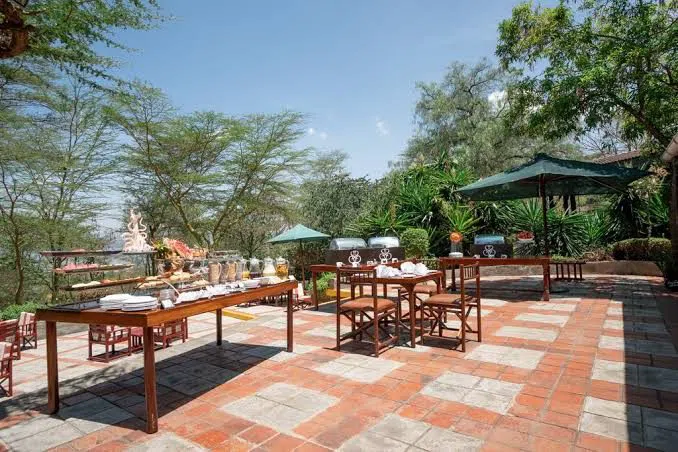
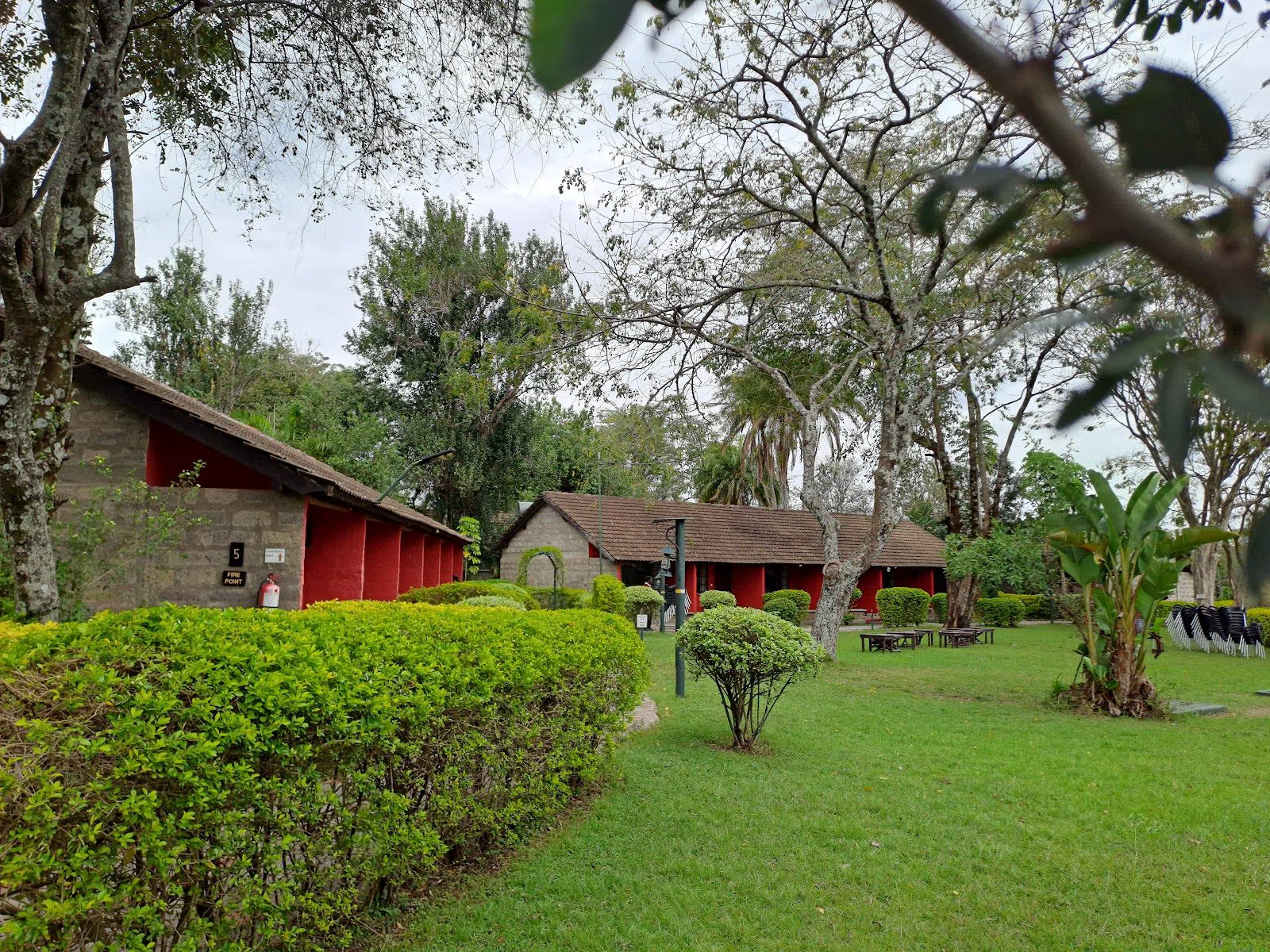
Sarova Lion Hill Game Lodge steps 67 chalets up the wooded Lion Hill ridge inside the park. A long timber viewing deck and bar look down over the lake to the far hills, and the pool terrace sits among euphorbia and acacia. Full board costs KSh 18,000 to 40,000 per person per night depending on season. Two conference rooms seat 70 theatre-style and hold 100 for cocktails, and the lodge runs safari groups and banquets as a matter of course. Sleeping inside the gate saves you a morning re-entry. Check whether your package night is in-park or in Nakuru town, because on a four-day run those are different mornings.
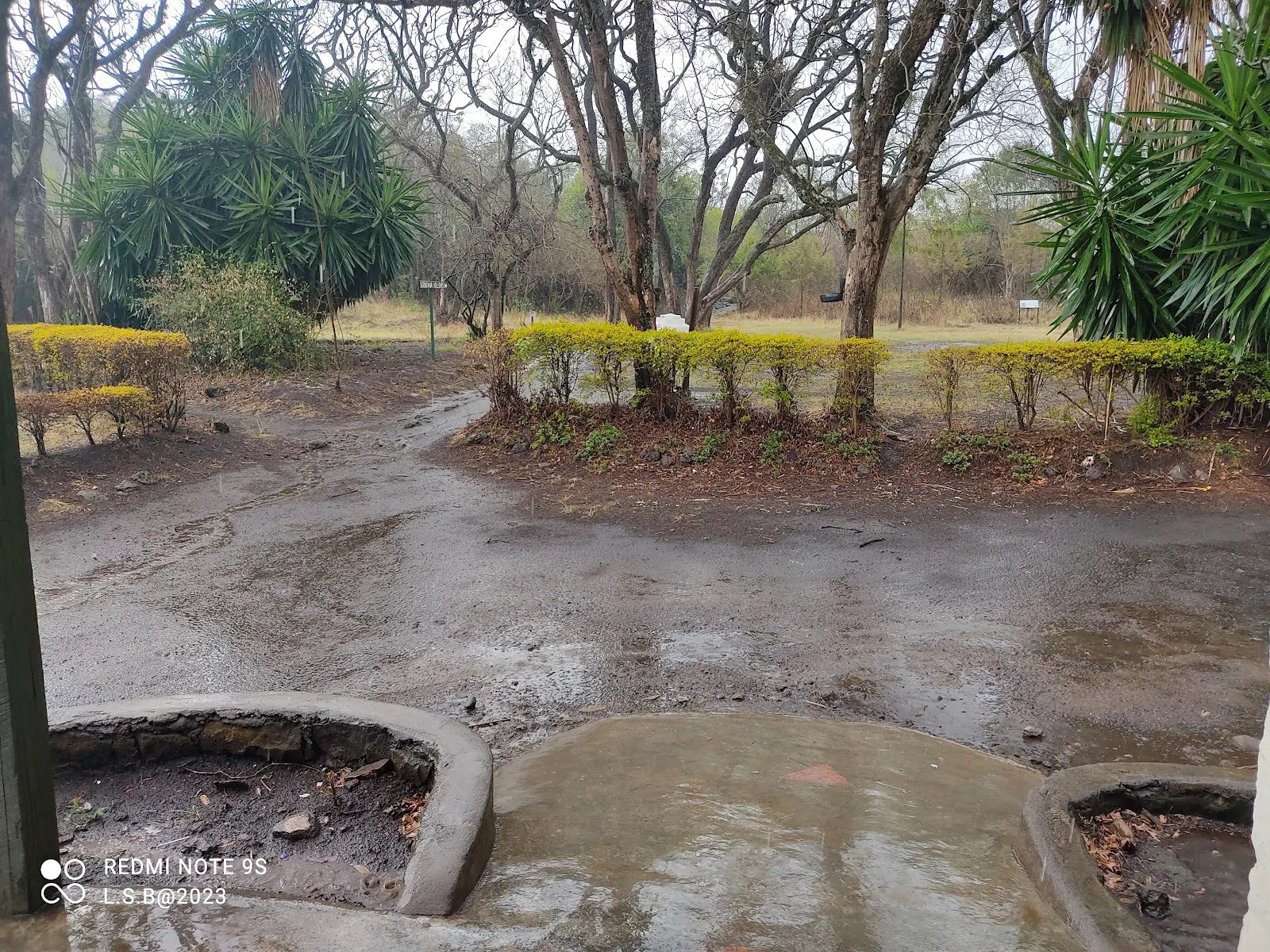
Hyrax Hill Prehistoric Site sits on a low stony hill above the Nairobi to Nakuru highway, on the road into Nakuru. Excavated Neolithic burial mounds and stone house footings mark 5,000 years of Rift Valley settlement, and bao game boards are carved into the bare rock. The small museum building looks out over Lake Nakuru. It opens daily 8:30 a.m. to 6 p.m. all year, school groups get a discounted rate, and you do not need to book. Entry is KSh 500 per non-resident adult and KSh 250 per child; citizens pay KSh 100, under National Museums of Kenya rates revised in May 2026. It fills a rained-off afternoon or the awkward hours before an evening game drive.
A Nairobi day either side
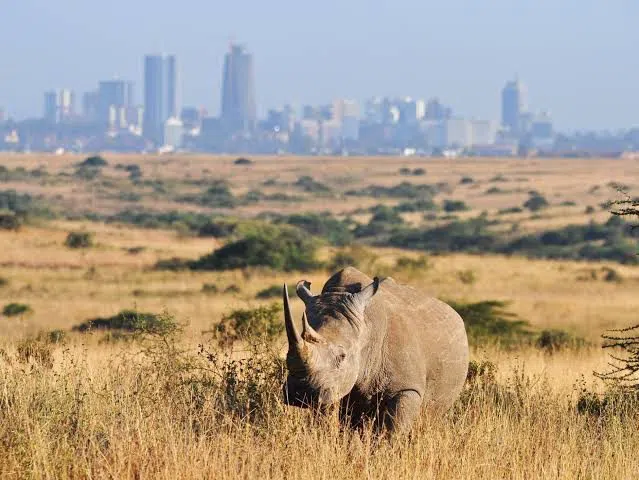
Nairobi National Park is the obvious add-on for the day before or after the drive, and the easiest place in Kenya to see rhino. The gates run 6 a.m. to 6 p.m. and the ticket is valid 24 hours. You can only pre-pay online, with a 5% gateway fee on the transaction, and no gate takes cash. Entry costs KSh 10,400 per non-resident adult and KSh 5,200 per child, with the vehicle extra. Bring your passport or ID, because the gate checks it against the eCitizen booking. Black rhino and buffalo graze open plains with the city's tower blocks standing behind them, and the Mombasa railway line runs along the boundary.
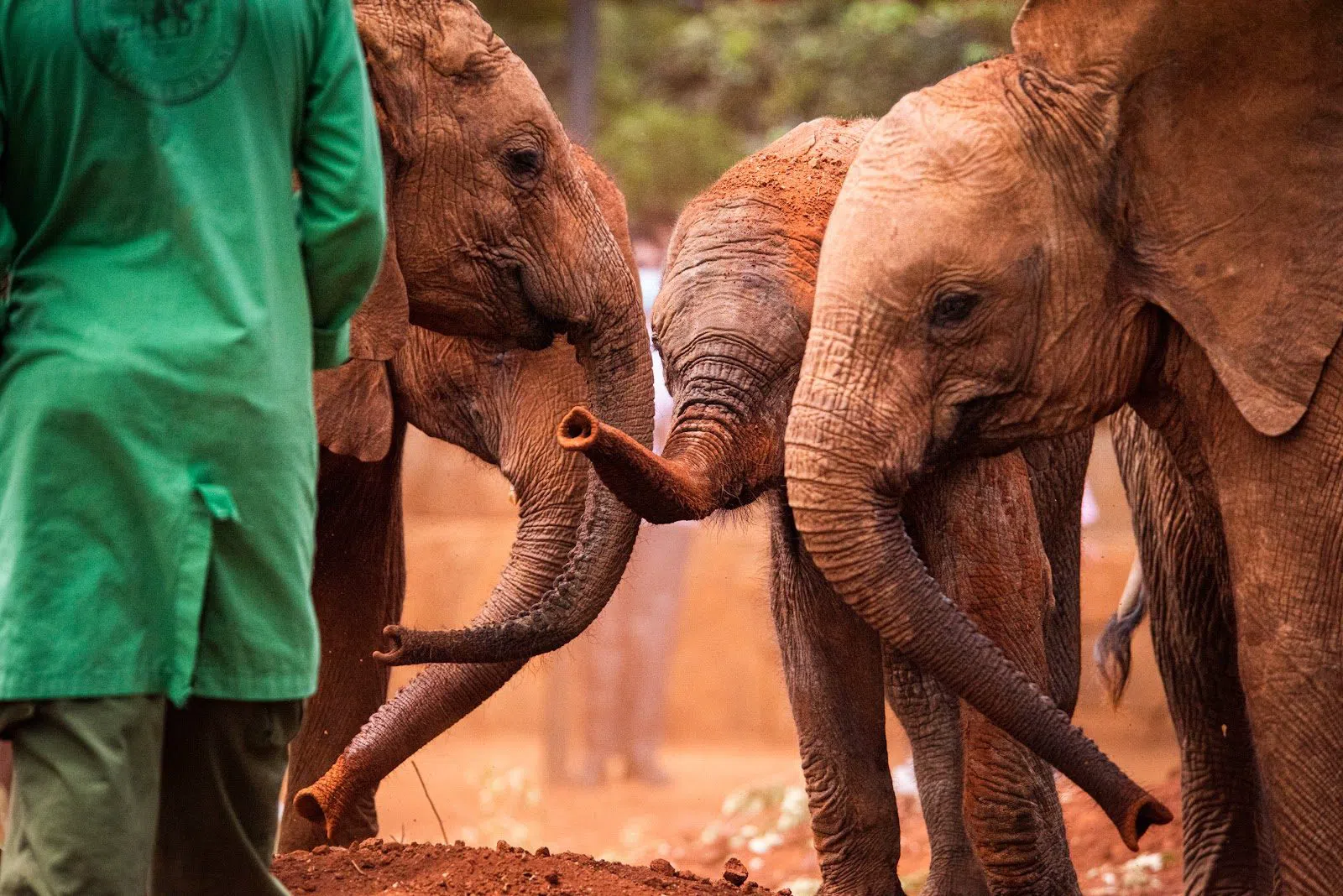
Sheldrick Wildlife Trust Nairobi Nursery, inside Nairobi National Park, opens to the public for one hour a day, 11 a.m. to noon, every day except 25 December. You book through the Nairobi office in advance, within three months of the visit, and nobody sells entry on the day. You pay an entry donation to the trust, and KWS now charges every nursery visitor the park gate fee on top. Orphaned calves scrum around keepers in green coats in a red-earth clearing, oversized milk bottles raised overhead, with a churned mud wallow and a rope line of visitors. If you are travelling with children it is the best hour in the city, and it runs to a fixed clock with no way around the booking.
Best time to go
October falls inside the Mara's July to December fee band, so every day you spend inside the gates pays the top rate. January to June is half that. The four-day Landcruiser runs go seven days a week, and the season runs 1 July 2026 to 31 December 2027. The balloon price band quoted above is the July to October one.
Is it worth it
It suits a traveller with four clear days who wants the rhino sanctuary, the big-cat plains and a walk among game in one loop. It asks for long road days, tickets bought before you leave Nairobi, and dawn starts for the balloon and the quiet viewpoints.
Before you go
Buy the Lake Nakuru and Nairobi National Park tickets on eCitizen before you travel, and book the nursery hour, the balloon seats and the Maji Moto visit in advance. The nursery's one closed day is 25 December, and Hyrax Hill keeps its hours year-round. See the Nairobi guide and the Nairobi hotel search.
Før du drar
What does Maasai Mara entry cost in October 2026?
KSh 26,000 per non-resident adult per day on the July to December high-season rate, and the vehicle is charged separately. The ticket covers 12 hours, 6 a.m. to 6 p.m. Sekenani Gate takes cash in US dollars or Kenyan shillings, Visa or Mastercard, or M-Pesa. From January to June the rate is half that.
How long is the drive from Nairobi to the Mara?
Sekenani Gate is 231km from Nairobi, a realistic five to six hours on the A104, B3 and C12. Narok Town on the B3 is the last proper service stop for fuel, lunch, washrooms and cash, because past Narok the C12 degrades and facilities thin out.
Can I pay at the gate at Lake Nakuru and Nairobi National Park?
No. You pre-pay both through the KWS eCitizen portal, and no gate takes cash. Lake Nakuru entry is KSh 11,700 per non-resident adult for 24 hours, plus a vehicle charge; Nairobi National Park is KSh 10,400 per non-resident adult, with a 5% gateway fee on the transaction. Carry the passport or ID you booked with, because the Nairobi gate checks it.
Will I see flamingos at Lake Nakuru?
Not in the old numbers. The lake has doubled in area and drowned the northern shore tracks, and the big flocks have largely shifted to Elementaita and Bogoria. Go for the fenced rhino sanctuary and the Rothschild's giraffe, and stop at Baboon Cliff Viewpoint, which is free once you are inside the park, to see how far the water has risen.
Do the balloon flight and the elephant nursery need booking ahead?
Yes to both. Governors' Balloon Safaris flies at dawn from Little Governors', 45 minutes to an hour in the air, at KSh 58,000 to 61,000 per adult with champagne and a bush breakfast; in peak months the flights fill up, and groups get split between basket compartments. The Sheldrick nursery is open 11 a.m. to noon daily except 25 December, and you book through the Nairobi office within three months. There is no same-day entry, and you now pay the park gate fee on top of the trust donation.