
The fixture list says Gor Mahia against AFC Leopards, ninety minutes, one ground on Lang'ata Road. What happens around it is that Nairobi sorts itself by language at the turnstile, by estate on the matatu home, by which lake fish you order afterwards, and then spends an afternoon shouting across the seam. In 2026 that seam runs through a borrowed stadium, because the big one is locked.
Two clubs and the in-law joke that names the fixture
AFC Leopards was founded in 1964 as Abaluhya United, a club assembled by Luhya families who had come to the city for work and settled in the eastern estates. Gor Mahia followed in 1968, taking the name of a Luo figure remembered as a warrior and a diviner, and went on to become Kenya's most decorated club and the only Kenyan side to have won a continental trophy, in 1987. Between them they account for most of the league titles ever awarded in this country, and for almost all of its football arguments.
Kenyans rarely call this the Nairobi derby. They call it the Mashemeji Derby, and mashemeji is Swahili for in-laws: Luo and Luhya families have intermarried for so many generations that the taunting and the affection come out of the same gesture. Understand that before you buy a ticket. It explains why a fixture that looks purely ethnic from outside is played mostly as comedy and volume from inside, and why the man next to you on the terrace will happily tell you which half of the family he married into.
Nor is this a derby of two postcodes. Both clubs were built by migration from the lakeside west into the city's working estates, and both supports have since climbed the class ladder at different speeds and in different directions. The same ninety minutes can be watched from a concrete terrace, a goat-roasting market, a Parklands garden bar or a whisky lounge on Lang'ata Road, and produce four genuinely different afternoons. The route below follows that split deliberately.
The borrowed bowl on Lang'ata Road
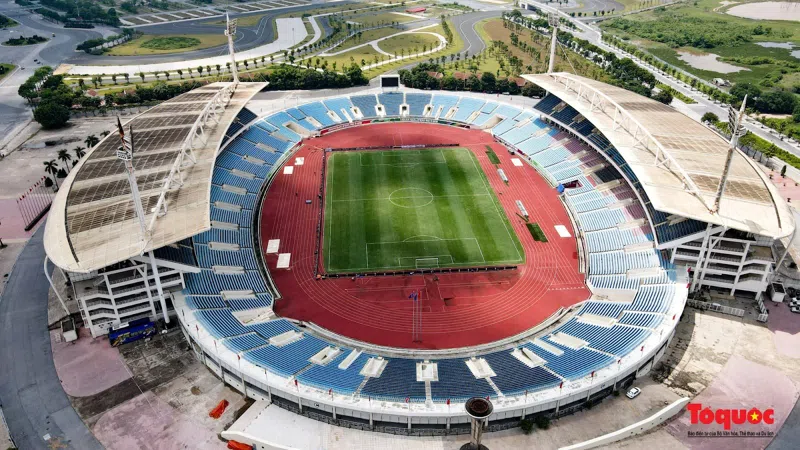
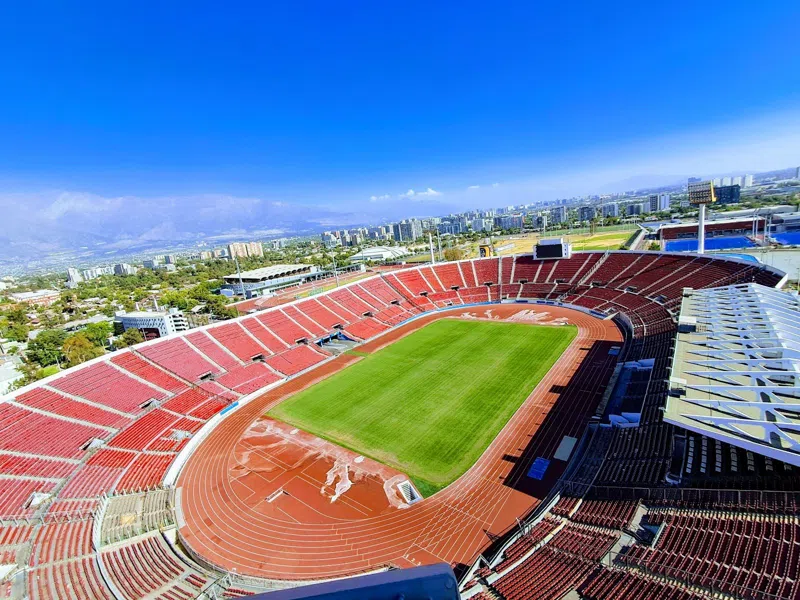
Nyayo National Stadium (Lang'ata Road, a short walk from Nairobi West) is the derby's home for now, and the reason is as interesting as the ground. Kasarani, the big national stadium out on the Thika Road side of the city, has been shut to the public since February 2026 for the second phase of its AFCON 2027 rebuild. The Kasarani roar is temporarily homeless, and the whole rivalry has been compressed into a smaller, lower, considerably louder bowl. Gor Mahia and AFC Leopards both list Nyayo for 2026/27, and it hosted Gor's CAF Champions League tie against Pyramids on 6 September 2026.
There is no door policy and nothing to negotiate: gates are ticketed, and a group of ten simply buys ten of the same terrace tickets and walks in together. Regular terrace is KSh 300, VIP KSh 1,000, VVIP KSh 5,000, and a Gor Mahia season pass starts at KSh 4,080 for seventeen home games, a figure worth knowing because it tells you how cheap committed Kenyan football support actually is.
Derby day sells out hours before kick-off, so send one person for tickets in advance rather than arriving as a party and hoping. Agree a meeting gate before you leave your hotel: the Gate A and Gate C split separates green from blue, and discovering that at the perimeter with half your group already inside is how people spend the first half on the phone. The stadium sits roughly four kilometres south of the city centre, fifteen minutes by car on a quiet morning and close to an hour in match traffic.
The overflow grounds, and what they tell you
With the national stadiums out of service, league fixtures have scattered across smaller venues, and two of them are worth a visit in their own right if your dates do not line up with the derby itself.
Dandora Stadium (Dandora, Eastlands, about twelve kilometres north-east of the centre) was opened by the county in March 2024 and now carries top-flight football the closed stadiums cannot. Entry is KSh 200 to 300 at the gate, there is no ticketing apparatus to speak of, and this is where you see the derby's Eastlands half at street level rather than through a camera lens. The format suits a small group with a Nairobi host, not a large unaccompanied foreign party. Go with someone who knows the estate and leave before dark. Gor Mahia's own coach argued publicly in July 2026 that the surface is not fit for the top flight, which tells you exactly how raw the setting is.
Ulinzi Sports Complex (Lang'ata, inside the Kenya Defence Forces grounds) is the opposite experience, and only a few kilometres from Nyayo. Matches are publicly ticketed at KSh 200 to 300, but the security is army-run: expect bag checks and ID at the gate, arrive early, and do not photograph the perimeter or the personnel. Groups are fine. Parade-ground order and searched bags sit a short drive from the smoke-bomb terraces of the derby proper.
An estate pitch where the street game actually lives
Camp Toyoyo Grounds (Jericho, Eastlands, roughly six kilometres east of the centre) is free, unticketed and ungated, because it is an estate pitch rather than a stadium. Both Gor Mahia and AFC Leopards have trained here, and Nairobi's street football genuinely lives on it: age-group sides, informal leagues, a permanent audience along the touchline.
It is not a find and I am not going to dress it up as one. The turf laid in 2015 at a reported cost of KSh 90 million is visibly finished, and photographs circulating in August 2026 set off a round of public anger about how badly the ground has been let go. Come for the crowd, the standard of play and the context, not the facility. A small group with a local is welcome; a large party carrying cameras will change the atmosphere within a minute of arriving, which is a reason to keep it to two or three of you.
Learning the map before the whistle
The derby is about class and geography as much as ancestry, and the most useful thing you can do is read that geography with someone who grew up in it, before match day rather than after.
Nai Nami (city centre) is a walking tour led by men who spent their childhoods on these streets, and it is structured unusually: one guide per one or two guests, so a party of ten walks as five pairs and reconvenes. That makes it unsuitable for anyone wanting a lecture and ideal for anyone wanting a conversation. It costs USD 37 per person including lunch and soft drinks, needs at least 24 hours' notice, and should be booked around four weeks ahead between June and September. Do it on the Friday and the terraces stop being noise on Saturday and start being a map.
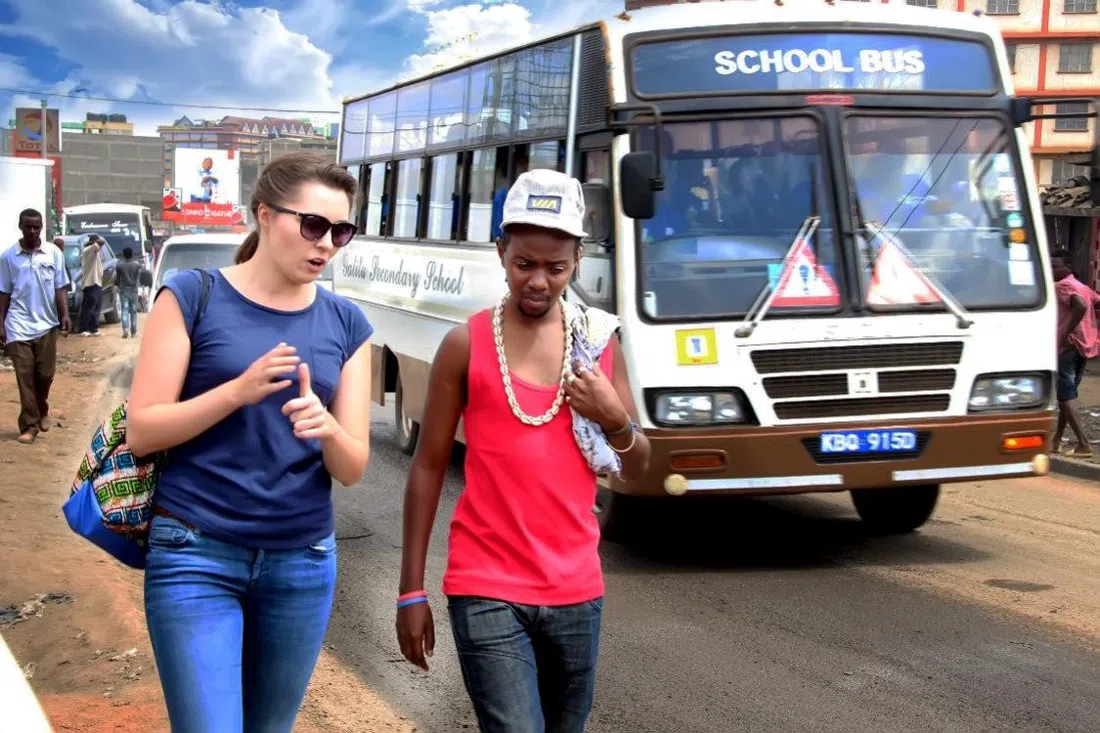
Gikomba Market (off Landhies Road, east of the centre) is where the replica Gor and Leopards shirts on every Nairobi terrace come from, along with most of the European kits. It is the largest second-hand clothing market in the region and is estimated to employ around 65,000 people, which makes it the most vivid single stop in this story and also the one with real pickpocket risk. Shirts run KSh 100 to 800. Treat it as a guided hour early in the morning, in a small group, with nothing in your back pockets, rather than an afternoon's wander.
Eating on both sides of the rivalry
Food is where the derby is least coded and easiest to join, because both halves of this fixture eat extremely well and neither is subtle about it.
K'Osewe Ranalo Foods (Kimathi Street, city centre) is the Luo table: whole tilapia, ugali, greens, three generations of the Osewe family deep. Kenyan match reports name it among the places fans pack after the derby. It takes groups without ceremony, on long tables with fast turnover and no booking culture. Expect KSh 600 to 1,200 a head, and time your arrival either before the whistle or well after the rush, because the window immediately after full time is chaos.
Mama Oliech Restaurant (Marcus Garvey Road, Kilimani) is the sit-down end of the same Lake Victoria food culture, and a football address in its own right: the Oliech name belongs to the family that produced Kenya's best-known striker. Fish is priced by size, so budget KSh 1,200 to 2,000 a head. The courtyard handles six to twelve comfortably; call ahead at weekends, when it fills with Nairobi families. The Westlands branch has closed, so Marcus Garvey Road is the one.
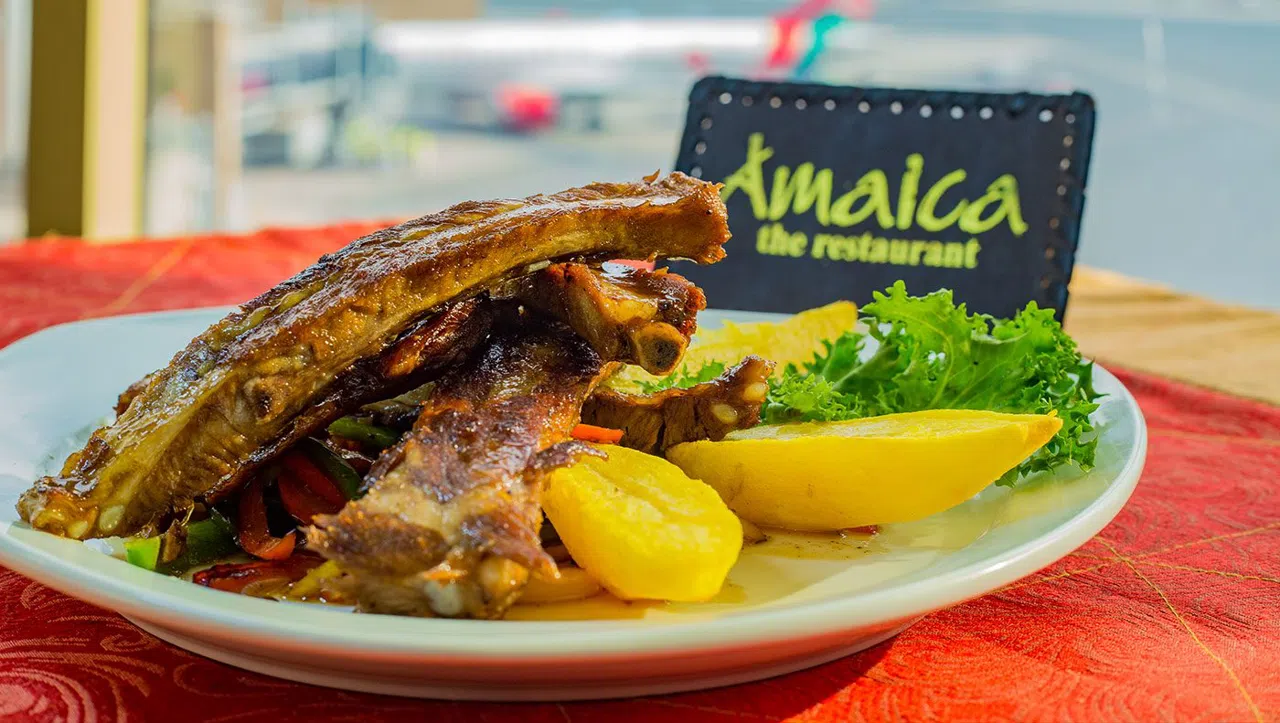
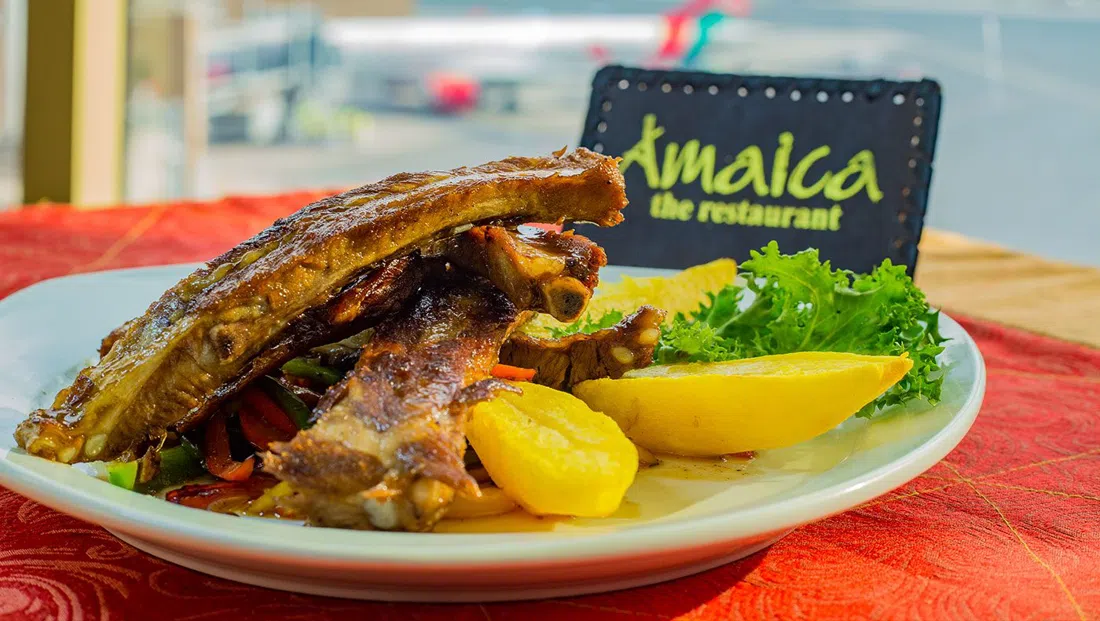
Amaica The Restaurant (Kilimani) is the other half of the table. Amaica is the Luhya word for the traditional hearth, and this is where the western-Kenya cooking that AFC Leopards' support claims as its own is served properly: ingokho, free-range chicken, above all. KSh 1,500 to 3,000 a head, private dining available, and book ahead for anything over eight. Eating here and at Mama Oliech across one weekend is the cheapest anthropology lesson available in this city.
Kenyatta Market (Ngong Road, by the national hospital) is match-day eating in its most honest form: you buy goat by the kilo, a stall seats your whole party around it, and four people share a kilo with ugali and kachumbari. Reckon KSh 900 to 1,200 per kilo, open 06:30 to 21:00 daily. Agree the price per kilo before anything is cut, and hold firm. Visitors have been quoted four times the going rate, and the correction is polite rather than confrontational.
Screens, yards and the class line
K1 Klub House (Ojijo Road, Parklands) is the default answer when a Nairobian asks where you are watching it. Screens, nyama choma by the kilo, shaded garden bays that work as booths for ten or more, no door policy, open essentially round the clock. KSh 1,500 to 3,000 a head with beer and meat. Its real value is the mix: you can watch a Kenyan derby next to people who will explain the subplots to you, which most sports bars cannot manage.
1824 Whisky Bar & Lounge (Lang'ata Road) is the right place to end a derby afternoon if you have come out of Nyayo or Ulinzi, being close to both. Big groups are easy, the VIP lounge is bookable, and it runs to 5am Thursday to Sunday. KSh 2,000 to 4,000 a head. It is a Nairobi middle-class sports bar rather than anything terrace-like, which is precisely the class line the rivalry runs along.
Nairobi Street Kitchen (Westlands) solves the group that has split its loyalties: a complex of counters where everyone eats something different and shares a table, with the big matches screened across the site. KSh 1,500 to 3,500 a head, tables bookable online, busy from Friday evening. It is also where you will find Nairobians who follow the English league far more closely than the local one, which is part of the story too.
The Alchemist Bar (Parklands Road, Westlands) is the city's best-known open-air yard: no bookings, groups simply arrive, entry charged on event nights, and very full after dark. KSh 1,500 to 3,000 a head. Come to hear how the derby is discussed by creatives, expatriates and Kenyan professionals who would never stand on the Nyayo terrace, and notice how the language changes.

The comfortable bookend for a party of twelve
The Carnivore Restaurant (Lang'ata, off Lang'ata Road) is the institutional end of Kenyan meat culture: 420 seats, a set feast at KSh 3,500 to 4,500 per person, lunch 12:30 to 14:00 and dinner 19:00 to 21:30, group bookings by phone, coach parties routine. It is unashamedly a tourist room and should be used as one, the comfortable close to a day that began on a concrete terrace rather than the authentic part of it. For a group of twelve with mixed appetites and one person who has had enough of estates and markets, it earns its place.
Practical notes for a derby weekend
Transport. Matatus serve every venue here and cost small change, but they require either confidence or company; ride-hailing apps work reliably across the city and are the sane default for Nyayo, Ulinzi and Lang'ata, where a one-way fare is usually a few hundred shillings. Budget double the map's travel time on match day, particularly along Lang'ata and Ngong Roads. For Dandora, Jericho and Gikomba, go with a local and go in daylight.
Cash. M-Pesa covers almost everything, including many market stalls, and a tourist SIM is worth twenty minutes at the airport. Even so, carry small notes: stadium gates, estate grounds and meat stalls run on cash, and nobody at Kenyatta Market wants to break a KSh 1,000 note for a KSh 300 purchase.
Timing. League kick-offs mostly land in the afternoon, but while the national stadiums are shut, venues and times move at short notice, so confirm both in the week of the match rather than the month before. Derby tickets go hours ahead. June to September is peak season, which is also when Nai Nami needs four weeks' notice.
Budget. A full terrace day, meaning a ticket, a shared kilo of goat, matatu fares and a bar afterwards, lands around KSh 3,000 to 4,000 a head. Add USD 37 for the walking tour and KSh 4,500 if you finish at the set feast, and the same weekend tops out near KSh 10,000.
Where to sleep. Nairobi West and South C put you within walking distance of Nyayo and a short hop from the Lang'ata bars; Westlands and Kilimani suit anyone whose evenings matter more than the match. Compare both in the Nairobi hotel search, and read the wider Nairobi guide for everything either side of the ninety minutes.